
An EV charger trips the breaker for one of four reasons. The charger is set higher than the circuit, the circuit is shared, a connection is heating, or two ground fault devices disagree. Most of these signs need an electrician but can wait for a scheduled visit. One can’t. If the plug or outlet is warm, discoloured or smells of hot plastic, unplug the car and leave it unplugged.
The clue is timing. Does it trip the instant charging starts? Or partway through the night? Before you reset it again, write down three things: how long the car charged, which breaker went, and what else was running.
Match the trip to the cause
| When it trips | Which breaker | What it points to |
|---|---|---|
| The moment charging starts | The charger’s GFCI breaker | Two ground fault devices, or a real fault such as water in an outdoor unit |
| Partway into a charge | The charger’s own breaker | A charger set higher than its circuit, or another load on the same circuit |
| Only with the dryer, range or heat running | The main | The house service, not the charger circuit |
| On a load it should carry, setting correct | The charger’s own breaker | A worn breaker opening below its rating |
| More often each week, with a warm plug | Either | A loose connection heating under load |
The last row is the one that isn’t a scheduled visit. A hot receptacle isn’t a breaker problem. That’s a call for an emergency electrician in Barrie, not another reset.
The setting and the breaker were never matched
A Level 2 charger pulls full current for hours. The code treats that as a continuous load. That means the breaker has to be rated above what the charger draws.
The charger’s maximum current has to sit under the breaker. Tesla’s Gen 3 manual pairs a 50 A breaker with a 40 A maximum output. Leave a charger at its factory maximum on a smaller circuit and it’ll run a while, then trip. Nothing’s broken. The two numbers just don’t match.
You’ve got two honest fixes. Lower the setting to suit the circuit you have. Or run a circuit sized for the charger, which is the circuit work in our Barrie EV charger installation.
Can I just put in a bigger breaker? No. The breaker protects the wire. A bigger one lets the wire carry current it wasn’t sized for.
When the breaker itself is worn
The setting’s right. The circuit’s dedicated. Why does it still trip? An old breaker can open below its rating. That’s the one case where the breaker is the fix.
It gets tested under load before it gets replaced. Swapping breakers until one holds is a guess, not a diagnosis.
A shared circuit is the same fault, smaller
ESA’s homeowner factsheet is plain about it. Use a dedicated circuit, “otherwise it may draw too much power too quickly for your home.” That goes for the cord that came with the car too.
A garage freezer, a compressor or a block heater on the same circuit only adds load. Our post on a Level 1 EV charger covers the cord version, where the cure is a dedicated outlet.
Two ground fault devices on one circuit
Plug-in or hardwired? It matters here. Some hardwired chargers carry their own ground fault protection. Put a GFCI breaker ahead of one and two devices watch for the same fault. They can disagree, and one of them opens.
Tesla’s Gen 3 manual says it directly: the unit “includes integrated GFCI protection - do not install a GFCI circuit breaker.”
Two checks before anyone touches the panel:
- Is it the breaker or the charger? A charger can stop on its own fault and show a light with no breaker tripped. The same manual says that after a ground fault during charging, the unit waits 15 minutes and tries again.
- Is it plugged in or hardwired? A hardwired unit on a GFCI breaker that trips the moment charging begins needs its manual read first.
Did it start after rain? Is the charger outside in the cold? Look for water before you blame either device.
When the main goes instead
The charger’s breaker holds and the main trips? That’s the service, not the charger. A panel sized before the charger existed gives up when the dryer, the range and the car all draw at once.
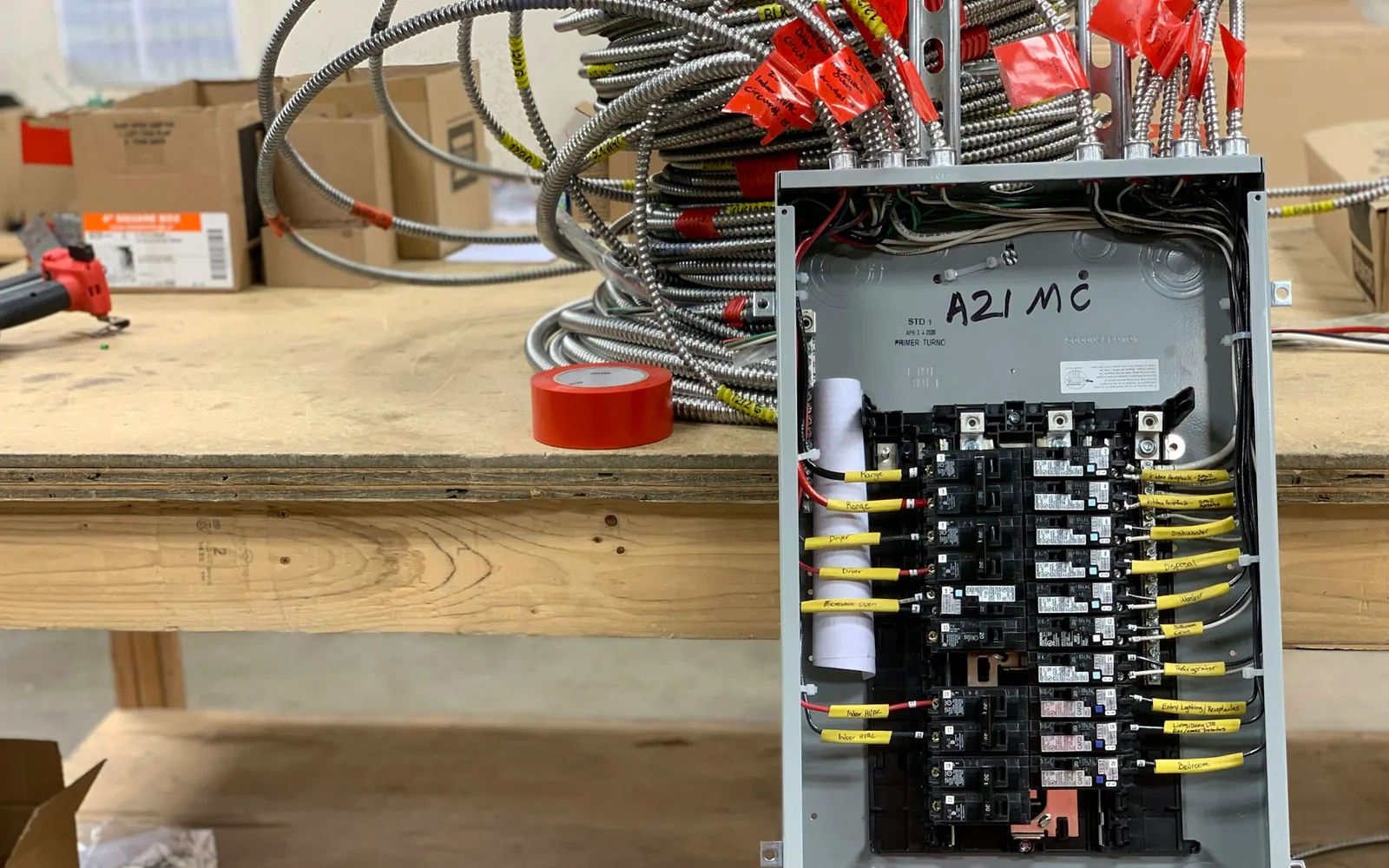
Trevor Tremblay, a technical safety advisor at ESA, names this as the most typical hazard ESA sees. Chargers go onto existing panels “that don’t have the capacity” for them. He says the contractor runs a Section 8 load calculation, or asks for “historical data from the utility for the peak demand for the last 12 months.”
That history isn’t ours to read. It comes from the utility for your address: Alectra in the city, InnPower in Innisfil, Hydro One in the townships.
He names two answers. A service upgrade, or an energy management system that holds the charger back while the house needs the capacity. If it’s the service, that’s a Barrie panel upgrade, and the charger waits until it’s done.
The connection you can’t see
A charger can double the load on a service. At that load, Tremblay says, a loose connection nobody noticed under a lighter load starts “heating up slowly and over time could cause a fire.” His advice is a contractor check that everything’s “torqued and doesn’t show any signs of heat.”
A breaker that trips more often each week, with nothing else changed, fits that. Open the connection. Don’t just replace the breaker.
What we won’t do
- Put a bigger breaker on the old wire. It hides the overload and removes the protection.
- Add a GFCI breaker ahead of a charger whose manual says not to. Two devices will keep fighting.
- Reset a breaker that trips again the instant it’s reset. That’s a live fault. It stays off.
What to have ready when you call
- How long the car charges before the trip, and which breaker goes.
- The charger model and its current setting, if the app shows it.
- Plugged in or hardwired.
- What else is on that circuit, and what was running.
- The ESA permit and Certificate of Acceptance for the original install. No permit? Say so. A new circuit needs the EV charger permit in Ontario either way.
Describe what the breaker does and when. The answer is a setting, a circuit, a connection or the service. Each is a different job, and the timing usually says which one to book.